

Threat hunting training continues – fourth course completed
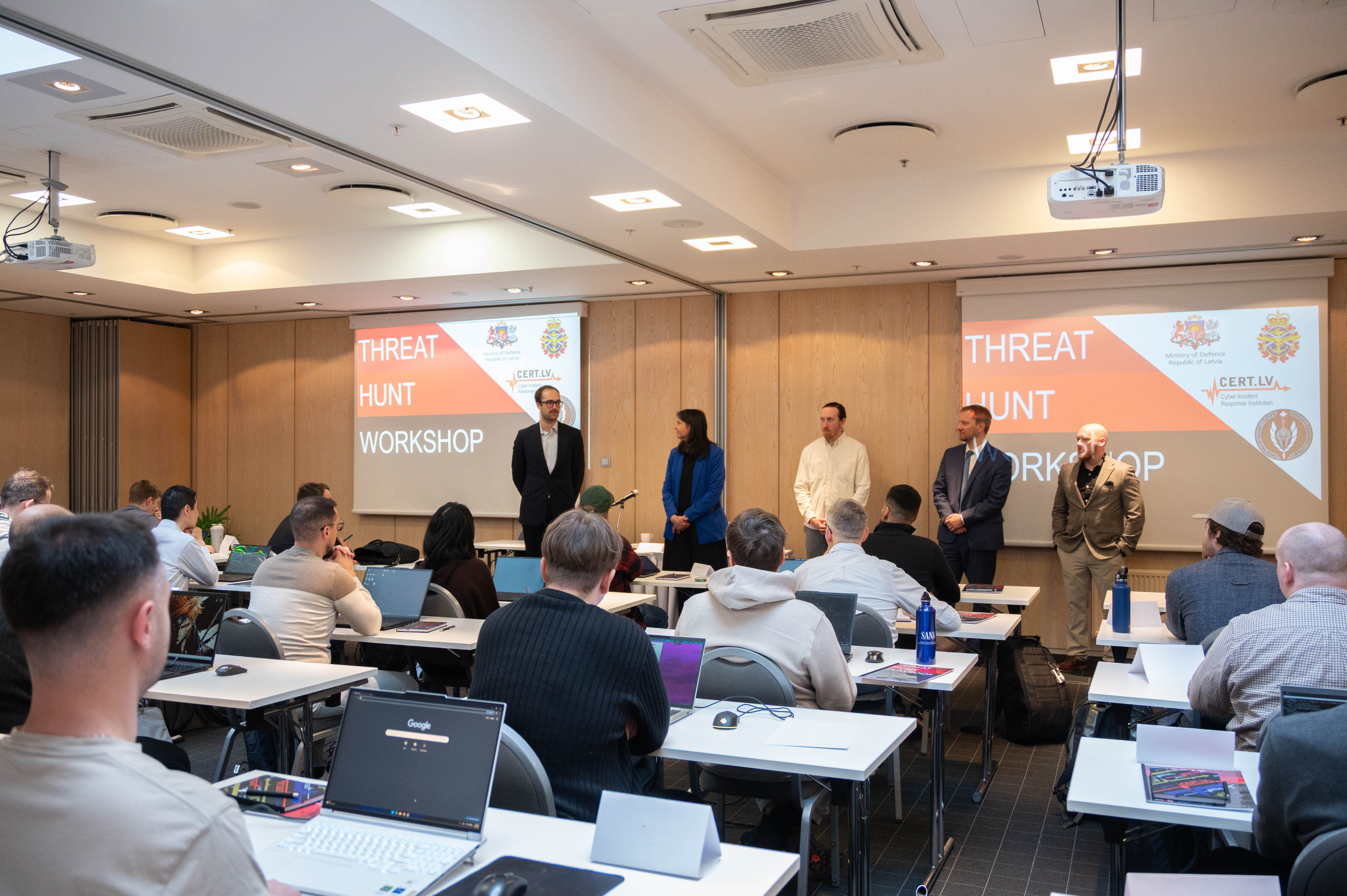
Photo: Amy Langlois
March 24th marked the beginning of the fourth Threat Hunt Workshop led by Canadian and Latvian cyber specialists bringing 37 participants from 14 countries to Riga, Latvia to equip them with the skills to act proactively and detect threats before they materialize.
The Workshop was organized in collaboration with the Latvian Ministry of Defence, the Cyber Incident Response Institution of Latvia (CERT.LV), and the The Canadian Armed Forces Cyber Command (CAFCYBERCOM), creating a platform for sharing expertise from mutual collaboration by both countries.
In his opening remarks Mr. Rolands Heniņš Head of National Cybersecurity Centre stressed “We are truly proud of this training course. It is a testament to the long-term, enduring cooperation with the Canadian Armed Forces, which has developed from the presence of a Canadian-led brigade in Latvia and has over time become the basis for a strong partnership.” He also noted: “The data shows that the situation in Latvian cyberspace is generally stable, but the possibility of larger incidents remains high. We must take steps every day to detect and mitigate risks, rather than wait for incidents to occur.”
“Cybersecurity is a global challenge,” said Major Matt Giroux, Commander of Cyber Task Force 2 (CTF 2). “Cyber threats do not respect borders. That is why collaboration like this is essential. We learn from each other, and we become stronger together.”
The fourth Threat Hunt Workshop brought together participants from both military and civilian organizations, thereby underscoring the growing importance of cross-sector collaboration in cybersecurity.
Canadian and Latvian experts worked alongside participants in the classroom, sharing real-world experience and equipping them with practical tools and techniques to identify cyber threats before they occur. The four-day workshop blended lectures with hands-on laboratory sessions. The Threat Hunt Playbook – a continuously updated guide of tactics, techniques, and tools – was enhanced with new workflows, artifacts, and automation to keep pace with the evolving cyber threat landscape.
Through joint instruction, Canada and Latvia are supporting other nations in building practical capabilities, strengthening trust, and improving overall readiness. As cyber threats become more sophisticated, this collaboration shows that shared expertise is not just a defensive asset – it drives effectiveness, transforms knowledge into action, and reinforces NATO’s cyber resilience for the future.
The Threat Hunt Workshop is co-funded by European Union under the CERT.LV-SOC-LV Project (Project ID. 101249230), more on the project: https://cert.lv/en/about-us/international-projects